Environmental Product Declaration
Unfabricated and Fabricated Steel Rebar
by CMC
Environmental Product Declaration (EPD) for Unfabricated and Fabricated Steel Rebar, manufactured by CMC. Declaration SmartEPD-2025-086-0608-01, prepared according to UL Part B: Designated Steel Construction Products, valid until August 25, 2030.
Download the EPD (PDF)
- Declared unit
- 1 metric ton of product
- Valid until
- August 25, 2030
- PCR
- UL Part B: Designated Steel Construction Products
Declaration details
- Manufacturer
- CMC
- Program operator
- Smart EPD
- Declaration number
- SmartEPD-2025-086-0608-01
- Date of issue
- August 25, 2025
- Valid until
- August 25, 2030
- Product category rules (PCR)
- UL Part B: Designated Steel Construction Products (version 2)
- Standard
- ISO 14025:2006 and ISO 21930:2017
- Declared unit
- 1 metric ton of product
- System boundary
- Cradle to gate (A1 - A3)
- Product specificity
- Product Average
- Manufacturing specificity
- Manufacturer Average, Facility Specific
- Manufacturing plants
- CMC - Mesa, AZ (11444 East Germann Road, Mesa, AZ, USA); CMC - Jacksonville, FL (16770 Rebar Road, Jacksonville, FL, USA); CMC - Sayreville, NJ (1 Crossman Road North, Sayreville, NJ, USA); CMC - Cayce, SC (CMC Steel South Carolina, New State Road, Cayce, SC, USA); CMC - Knoxville, TN (1919 Tennessee Avenue, Knoxville, TN, USA); CMC - Seguin, TX (CMC Steel Texas, Steel Mill Drive, Seguin, TX, USA); CMC Rebar - Waxahachie, TX (901 Cantrell Street, Waxahachie, TX, USA); CMC Rebar - Fresno, CA (2990 East Annadale Avenue, Fresno, CA, USA); CMC Rebar - Dallas, TX (4646 Singleton Boulevard, Dallas, TX, USA); CMC Rebar - Fredericksburg, VA (9434 Crossroads Parkway, Fredericksburg, VA, USA); CMC - Durant, OK (584 Old Highway 70, Durant, OK, USA)
- Product category
- Steel › RebarSteel
- Verifier
- Brandie Sebastian
- LCA software
- GaBi 10.9.1.10
- Program instructions
- Smart EPD General Program Instructions v.1.0, November 2022
Life cycle assessment results
Results per 1 metric ton of product.
Environmental Impact Assessment Results
Resource Use Indicators
Waste and Output Flow Indicators
ND = not declared. Life cycle modules: A1-A3 product stage, A4-A5 construction process, B use stage, C end of life, D benefits and loads beyond the system boundary.
Material composition
Hazardous substances
No regulated hazardous or dangerous substances are included in this product.
Product description
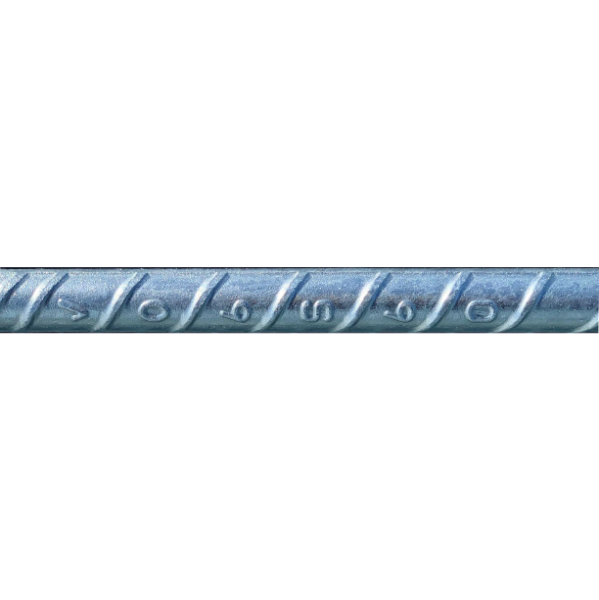
Rebar, also known as reinforcing steel, is an essential component in construction, commonly used in bridges, buildings, skyscrapers, homes, warehouses, and foundations to enhance the strength of concrete structures. Uncoated reinforcement bars (coiled, spooled, straight; deformed or smooth) primary function is to reinforce concrete, which is naturally weak in tension, by leveraging the tensile and compressive strength of steel, as defined by the Concrete Reinforcing Steel Institute (CRSI).
The rebar can be fabricated in CMC fabrication shops where it is cut and bent per customer request and assembled of specific pieces of rebar for installation in a concrete structure. Rebar is fabricated at a number of fabrication facilities. In order to represent the fabrication process, three representative facilities were averaged and used as a proxy for fabrication.
Interpretation
For unfabricated rebar products, the impact assessment results indicate that Module A1, i.e. raw materials, is the key contributor to environmental impact categories for ozone depletion potential. Module A2, i.e. transport to the mill, is not the most significant contributor to any impact category. Module A3, i.e. manufacturing at the mill, is the key contributor to global warming potential, acidification potential, smog formation potential, eutrophication potential, and abiotic resource depletion potential of fossil energy resources.
For fabricated rebar products, the impact assessment results indicate Module A1, i.e. raw materials including unfabricated steel product, is the key contributor to environmental impact categories including global warming potential, acidification potential, smog formation potential, eutrophication potential, and abiotic resource depletion potential of fossil energy resources. Module A2, i.e. transport to the fabrication facility, is not the most significant contributor to any impact category. Module A3, i.e. fabrication, is the key contributor to ozone depletion potential.
The interpretation diagram represents the unfabricated rebar product (without RECs).
LCIA results are relative expressions and do not predict impacts on category endpoints, the exceeding of thresholds, safety margins or risks. EPDs are comparable only when they follow the same PCR, functional unit and system boundary. The full EPD (PDF) contains the methodology, scenario assumptions and verification statement.
